


Even though immunizations are an unquestionable necessity for children, the aggravation doesn’t need to be. Here are a few hints from specialists.
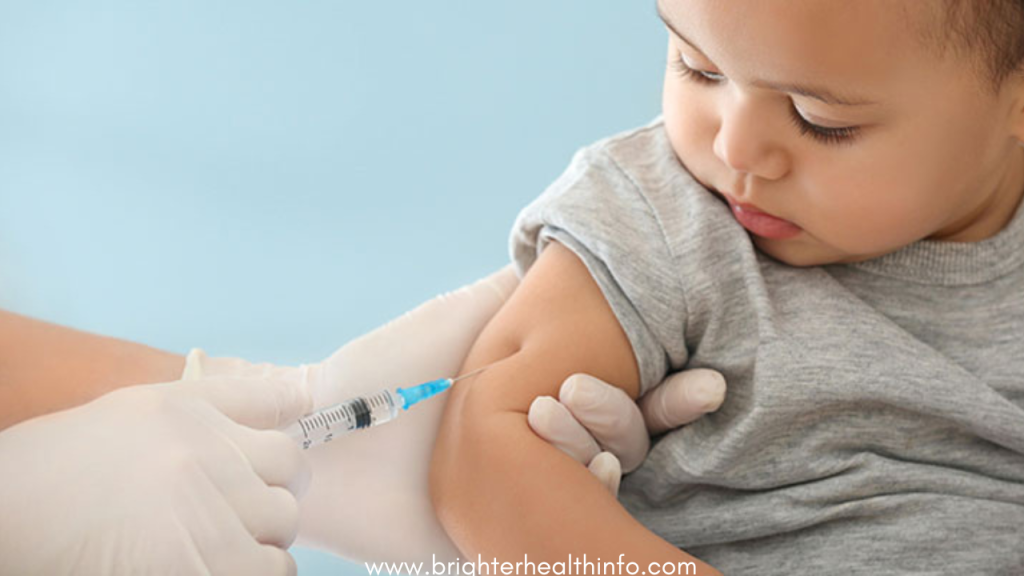
Many inexperienced parents can’t help thinking about how to relieve an infant during child shots. Before their subsequent birthday, infants might be jabbed with a needle up to multiple times during immunizations. These shots shield kids from feared sicknesses that used to be normal, says Ken Haller, MD, an academic partner of pediatrics at Holy person Louis College in Missouri. Regardless, the immunization agony can be disturbing for yourself as well as your youngster.
As per the Mayo Center, youth immunizations shield kids from various serious or possibly lethal sicknesses, including:
Chickenpox
Diphtheria
Haemophilius influenzae type b (Hib)
Hepatitis A
Hepatitis B
Human Papillomavirus (HPV)
Measles
Meningococcal
Mumps
Pneumococcal conjugate
Polio
Rotavirus
Rubella
Seasonal influenza (flu)
Smallpox
Tetanus
Tuberculosis
Whooping cough (pertussis)
These vaccinations aid in the development of antibodies in infants that will protect them against particular infections by containing an inactivated (dead) agent or a weakened live organism.
While mothers provide some immunity to diseases for their infants, this only lasts until they are about 6 months old. Children are at significant risk for deadly diseases at a young age, which is why baby immunizations are given early. For newborns and young children, illnesses like measles and chicken pox pose a serious risk to their lives. This makes early vaccination necessary, often starting as soon as the baby is born. If you wait until a child is older to vaccinate them, it might be too late to provide effective protection.
Many guardians stress over child shots and fever after antibodies. Some accept there is a connection between fixings in immunizations and chemical imbalances. Since immunizations were created, there have been chances, including the gamble of fostering the infection or serious secondary effects. In any case, most antibody secondary effects are extremely gentle, and serious ones are very uncommon. The utilization of life as a youngster immunizations has finished various youth illnesses that generally brought about hospitalization or demise.
The inability to get children immunized can bring about new scourges of sicknesses that can be hurtful — even lethal. For instance, before the measles immunization, 3 to 4 million individuals in the US got measles every year, 48,000 were hospitalized, and 400 to 500 passed on every year. Diphtheria was one of the most widely recognized youth reasons for death in young kids. Around 4 million individuals got chickenpox every year in the US, more than 10,500 of those individuals were hospitalized, and around 100 to 150 individuals kicked the bucket. What’s more, pertussis, or beating hack, a disease that makes it challenging to inhale, killed 8,000 individuals every year before the immunization was created.
While child shots are demonstrated to safeguard kids against sicknesses, there are likewise affirmed ways of calming an infant or child after inoculations. Here are some shot soothers that work best:
1. When getting baby shots, keep your baby close.
As per research distributed in the diary Pediatrics, guardians ought to remain close by so they can divert and quiet their child during the infusion. An ideal choice is to hold your child. Make certain to hold her so her upper arm or thigh is uncovered and the supplier can give the infusion. Kids who are somewhat more established can sit on your lap confronting you. Keep the child as dressed as could be expected so you can leave rapidly subsequently, Dr. Haller proposes.
2. Feed your child to ease the pain of vaccinations.
Your infant may feel less pain after vaccination if you feed them. According to a recent study, breastfed infants screamed less during vaccinations. Younger children and babies, according to Haller, “are considerably better at living in the present moment,” which allows their minds to quickly shift from “pain, hurt, hurt” to “food, food, food.” Nevertheless, he advises parents to feed their kids after the immunization because young children who have recently eaten may be more prone to vomit after the shot.
3. Under 6 Months, Some Sugar Water Might Help with Shots.
According to numerous studies, sugar not only aids in the medication’s absorption but also lessens the discomfort associated with vaccinations. A sugary treat is especially beneficial for infants under 6 months old. Give your infant some sugar water before the shot, or soak a pacifier in it and let him suck on it while the shot is being given.
4. Distract your infant to lessen pain from baby shots.
One of the most crucial measures you can do to lessen vaccination pain is to distract your kid. Bring along something that you know will keep her interested, such as bubbles, a beloved (or brand-new) toy, a noisemaker, or a tablet with your favorite movie.
5. Newborns may be soothed by numbing medication.
The discomfort associated with vaccinations can be reduced by applying numbing creams to the skin, such as EMLA (eutectic mixture of local anesthetics) cream. However, EMLA can take an hour or more to get going. Sprays that cool the skin may also be beneficial and work quickly, although they haven’t been proven to be as effective. Ask your doctor whether there is numbing cream available if you are concerned about Tdap (tetanus, diphtheria, a cellular pertussis) vaccine pain.

6. After the vaccination, rub your baby’s skin.
Gently touch your child’s skin close to the injection site after the vaccine. Your infant may not experience the discomfort from the baby injection as acutely thanks to the mild massage’s stimulating distraction. Adult participants in a study who massaged the area for just 10 seconds after receiving an injection reported reduced pain. According to a different study, applying pressure to the skin prior to may help lessen the pain.
7. To prevent fever after vaccinations, use Tylenol.
Giving your youngster Tylenol (acetaminophen) no time before the infusion might assist with reducing immunization torment a while later. It can likewise assist with lessening fever after immunizations, Haller says. Moreover, you’re probably going to feel a great deal of trouble when the shots are given and realizing that you’ve effectively aided may encourage you. If uncertain, converse with your PCP about forestalling fever after immunizations. One late investigation discovered that utilizing Tylenol to forestall a fever could decrease the viability of immunizations.
8. With baby shots, enquirer about alternatives to using needles.
In certain circumstances, specialists can decrease immunization torment by utilizing a sans needle gadget, for example, those that utilize packed air to place the prescription into the skin. You can inquire as to whether this is a possibility for your child, however overall these are utilized when numerous patients are being inoculated at one once. Assuming it’s any reassurance, scientists are striving to track down options in contrast to needles.
9. Ask about combination vaccination programmes.
Immunizations for a few sicknesses can be joined in a solitary shot to diminish the number of infusions your child requires, which lessens immunization torment. These incorporate the lockjaw, diphtheria, and acellular pertussis (DTaP) immunization, which is accessible in the mix with polio and hepatitis B antibodies, or polio and Haemophilus influenza type b (Hib) antibodies, Haller says. The American Foundation of Family Doctors suggests that mixed immunizations be utilized for your child whenever the situation allows.
10. Maintain Your Cool During Baby’s Vaccinations.
Can’t help thinking about how to relieve an infant during the series of child shots? Research has found that parent conduct represents around 50% of the misery that the child feels during an immunization. Unexperienced parents are much of the time restless about their child’s inoculation torment, Haller says. Breathe easy because of realizing that the immunization torment your child feels will just last a second, yet the insurance from the infection will keep going for quite a long time.


